


By Patrick Okino
At least 300 units of blood have been collected in a blood donation drive organized by the Pakistan Association in Lira City to help save the lives of patients at Lira Regional Referral Hospital.
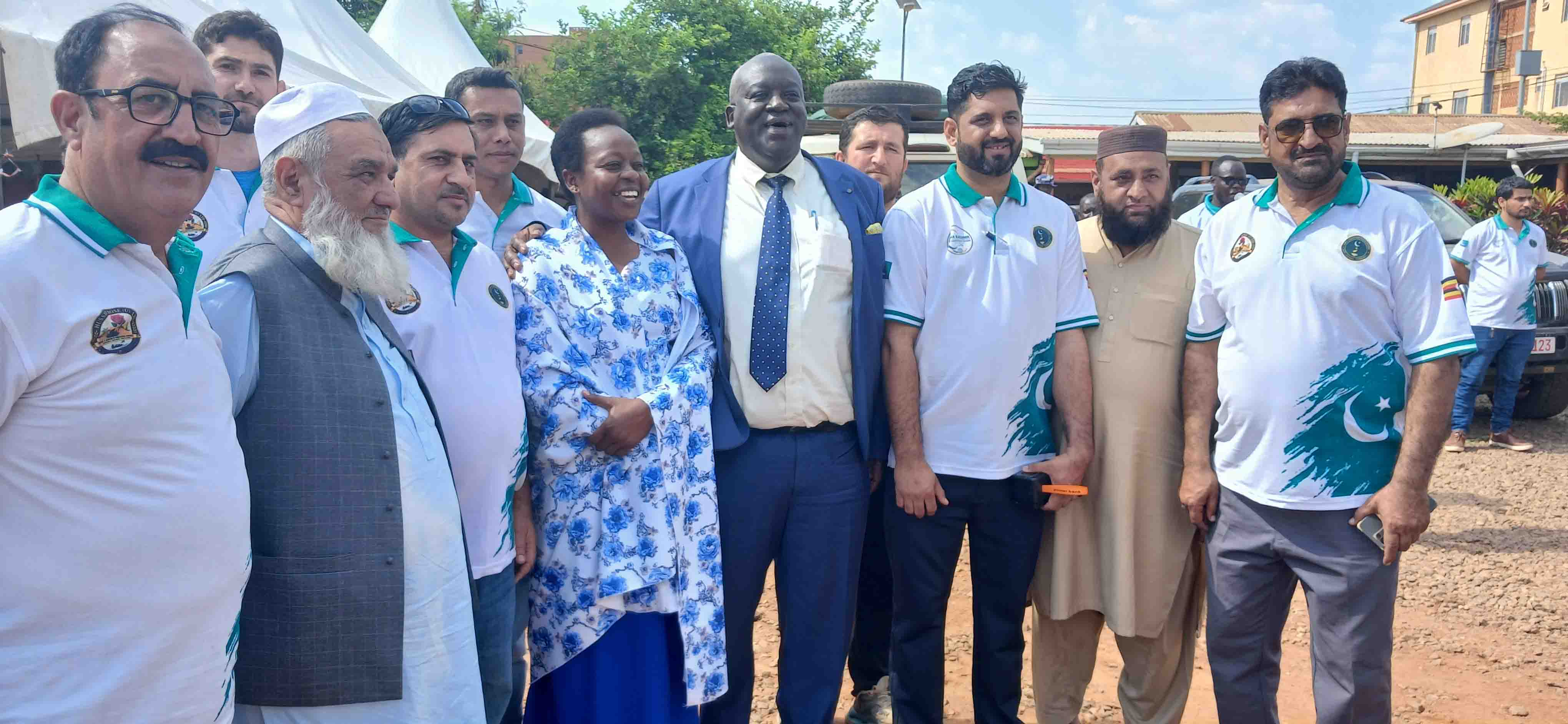
The one-day drive, held at GB Restaurant on Sunday as part of activities to mark Pakistan’s 79th Independence Anniversary, attracted members of the business community, public servants, boda boda riders and other residents.
The drive was officiated by the Minister of Disaster Preparedness, Relief and Refugees, Sam Engola.
Engola appreciated the Pakistani community and Lira Regional Blood Bank for organizing the initiative, saying it is often difficult to obtain blood quickly when patients are in critical condition.
“That is why you hear some patients die because of lack of blood at the facility. When a patient lacks blood, you cannot buy it. But I am very happy with our brothers for this charity, which will help the people of Lango Sub-region,” he said.
He also commended the Pakistani community, under its president Ateeq Muhammad Nawaz, for supporting vulnerable communities and undertaking charity activities in Lango.
Ateeq said the Pakistani community in Uganda conducts charity activities and gives gifts every August as part of celebrations to mark Independence Day, but this year they decided to organize a blood donation drive.
He said mothers who develop complications during childbirth and accident victims are among the people who urgently require blood transfusions, noting that shortages can sometimes lead to loss of life.
“This is the first successful initiative, and it has motivated us to continue to do more for the people of Lango and northern Uganda at large,” Ateeq said.
He said their initial target was to collect 200 units of blood, but the overwhelming response from the community enabled them to collect more than 300 units.
Hellen Grace Anyoda, a Senior Blood Donor Recruiter, said Lira Regional Referral Hospital requires about 1,000 units of blood, in addition to the demand from lower health facilities.
She said the biggest consumers of blood are patients suffering from severe malaria and sickle cell disease, as well as mothers who experience complications during childbirth.
Anyoda explained that blood demand fluctuates depending on the prevalence of malaria, with hospitals experiencing increased demand during periods of high malaria transmission.
“Those with sickle cell cannot wait a minute. The moment a case is reported, work on him or her. If you don’t, you would not see that person again,” she said.
She added that mothers who experience severe bleeding during childbirth also require immediate access to blood, as delays can be fatal.
Anyoda commended Lira Regional Referral Hospital for reducing maternal deaths associated with blood shortages, saying records indicate that such cases are now minimal.
She also praised residents of Amolatar District for consistently leading blood donation campaigns in the Lango Sub-region, describing them as a reliable source of blood whenever the region experiences shortages.
She said the region recently faced a blood shortage, but a collection exercise in Amolatar yielded 500 units of blood.
“That has never happened in any district. In Lira, people pretend to be very busy and fail to give blood,” Anyoda said.
Patricia Aceng, a resident of Lira City, said blood donation is a simple act, but its impact can be life-saving.
She encouraged everyone who is eligible to donate blood whenever the opportunity arises because you may never know whose life your donation will help save.
Patrick Odongo resident, appreciated Pakistani Association for the initiative saying other local leaders should also adopt.