

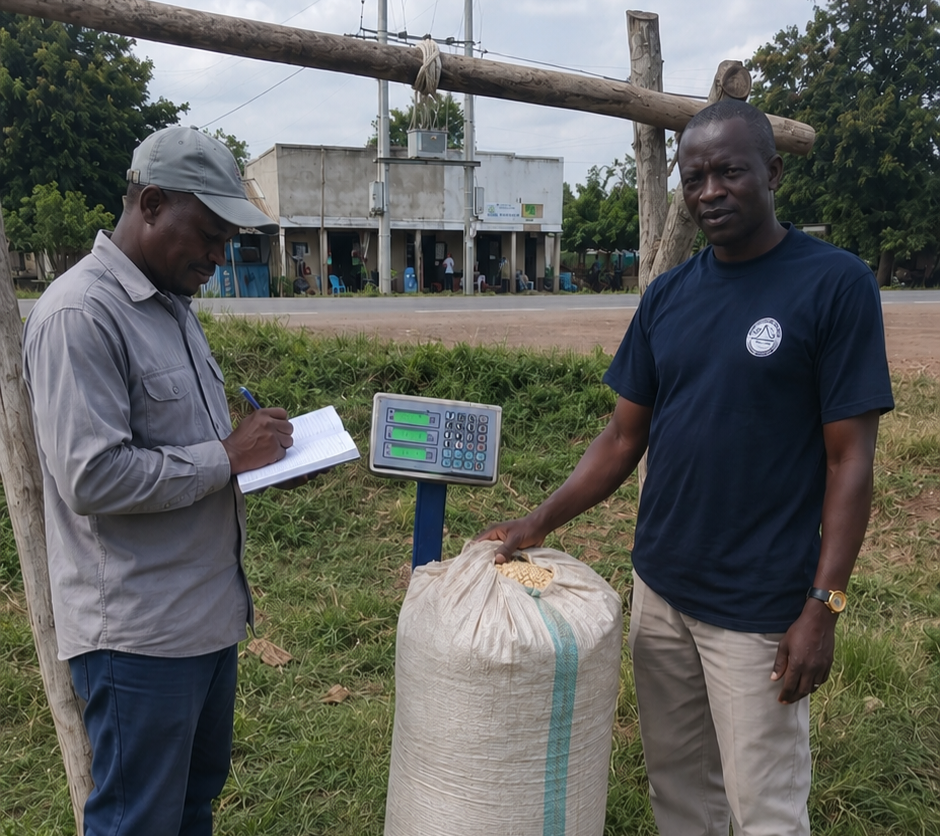

For Rogers Okuma, every farming season begins with hope but often ends in disappointment.
The smallholder farmer from Alanyi A Village in Akolodong Parish, Amwoma Sub-county spends months preparing his gardens, buying seeds, hiring land, paying labourers to plant and weed, and meeting the costs of harvesting. Yet when the produce is finally ready for sale, he says the returns rarely reflect the investment made.
“It feels bad when middlemen buy our produce cheaply after we’ve spent so much money from planting to harvesting. In the end, we only recover little or even make losses,” Okuma said.
His predicament mirrors that of many farmers in Dokolo District who say they have remained trapped in a cycle of low farm-gate prices despite increasing costs of agricultural production.
According to Okuma, the biggest challenge is not necessarily the absence of buyers, but the inability to reach genuine markets willing to offer competitive prices.
“We hear there are better buyers elsewhere, but they are far away. Transporting produce to those markets requires hiring vehicles, which is costly. Since middlemen come directly to our villages, many farmers have no option but to sell to them,” he explained.
As another harvesting season approaches, farmers are increasingly calling for interventions that can shield them from exploitation and improve their bargaining power.
Okuma believes farmers need systems that can provide reliable market information, connect them to genuine buyers and make quality agricultural inputs, particularly drought-resistant seeds, more accessible.
“We only want a system that helps us get better markets and earn from our sweat. Farming should improve our livelihoods, not push us deeper into losses,” he said.
In response to such concerns, a relatively new agricultural ecosystem known as WIIGOT is being introduced in parts of northern Uganda. The ecosystem operates through trained Commercial Agents who link farmers to suppliers, service providers and produce buyers.
Brian Opii, a Commercial Agent based at Cwagere Trading Centre in Kangai Sub-county, says many farmers continue to lose money because they lack access to timely market information.

“You may find maize being bought from farmers at Shs500 per kilogramme, yet it is selling at Shs1,000 elsewhere. Middlemen often cite transport and taxes, but farmers remain on the losing end,” Opii said.
He explained that WIIGOT seeks to address this information gap by enabling farmers to compare produce prices, access certified agricultural inputs, obtain extension services and identify potential buyers through a network of registered Commercial Agents.
Opii noted that the ecosystem is still new in Lango Sub-region and that sensitisation efforts are ongoing to help farmers understand how it works and determine whether it can offer a viable alternative to the long-standing dependence on middlemen.
For farmers like Okuma, any initiative that promises fairer prices and better market access offers a glimmer of hope.
“After all the sweat we put into farming, we deserve to earn something meaningful from our harvests,” he said.
WIIGOT is an agricultural ecosystem designed to connect farmers with trusted suppliers, extension service providers and produce buyers through a network of trained Commercial Agents. It aims to improve access to quality inputs, climate-smart services, market information and fairer trading opportunities while reducing post-harvest losses and exploitation within agricultural value chains.
The ecosystem is currently being rolled out in the Lango, Acholi and West Nile sub-regions, as well as Kiryandongo District.