


_
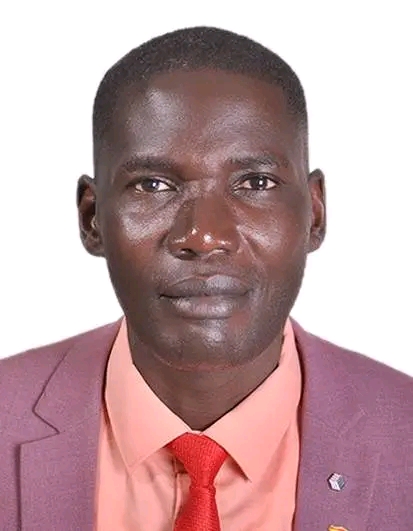
By Jimmy Okwany
To: His Excellency, Yoweri Kaguta Museveni, President of the Republic of Uganda*
Your Excellency,
I am writing to you on a matter of urgent national importance regarding the structural crisis facing the medical, dental, and pharmaceutical interns of our nation.
Your Excellency, during your recent State of the Nation Address at Kololo, you laid down an *unyielding philosophical marker for this country: “ No more sleep, “ “ no more corruption, “ and “ no more kukongola (leaning on your hoe when others are digging).” You spoke directly against the vice of kugumaaza or kuhuzya —the dangerous act of diverting someone’s attention from the real target to a wrong target.
It is precisely within the spirit of these directives that I address you. Right now, a corrupt network of state actors is attempting to divert your attention from the real target of health system consolidation to a wrong target: the structural destruction of the medical internship framework.
Proposals are being advanced to completely strip medical interns of their professional allowances and reclassify them as undergraduate students who must complete a mandatory six years before graduating. This is not reform, Your Excellency; it is an attempt by non-performers to hide budgetary deficits behind the forced labor of our country’s brightest young minds.
This policy would be one of the worst missteps in the entire history of the National Resistance Movement (NRM) regime.
The Historical Chronology and Contribution of the Intern
To understand why this policy is so destructive, we must look at the historical chronology of medical internship in Uganda. Since the post-reconstruction era of the late 1980s and early 1990s, medical interns—alongside Nurses and Senior House Officers (SHOs)—have not been passive students observing from the sidelines. They are the primary frontline workforce of our healthcare system.
An intern is a fully qualified graduate who holds a medical degree but requires one year of intense, supervised clinical practice to achieve a permanent independent practicing license. They are the absolute “ foot soldiers” of our health delivery system:
The Backbone of Emergency Care: In national and regional referral hospitals—from Mulago, Kirudu, and Kawempe to upcountry stations like Lira, Moroto, Soroti, Mbale , Mubende, Arua, Hoima, and Kabale—interns manage over 80% of daily clinical admissions and surgical emergencies.
The Custodians of the Night Shift : While senior consultants provide oversight, it is the medical interns , SHOs, and nursing interns who sacrifice their nights in theaters and emergencies. They work grueling 36-hour shifts, delivering babies in labor suites, setting fractures from boda-boda accidents, and monitoring ICU patients.
The Best Sellers of the NRM Agenda:Your Excellency, the NRM’s success is measured by the tangible well-being of the population. When a poor mother in a rural district leaves a government hospital with a healthy, safely delivered baby, or when a trauma victim is successfully operated on at 3:00 AM, they praise the NRM government for a functional health system. The people delivering that success on the ground are the interns. They are the literal face of NRM’s healthcare delivery. Stripping them of their livelihood while they dig the fields of public health is the ultimate form of kutuhenda—overburdening the productive while others sit idly by.
The Historical Precedent of Your Current Ministers
What makes the current attempt to abolish intern payments so profoundly unjust is the historical hypocrisy of the very ministers advising you to do so. They are guilty of kukongola —leaning on their hoes and denying the next generation the very tools that built their own foundations.
1. The Case of Dr. Jane Ruth Aceng
In 1993/1994, a young medical graduate named Jane Ruth Aceng, alongside her classmate and now-husband Dr. Andrew Ocero* , was posted to St. Mary’s Hospital Lacor in Gulu, later moving to Mulago Hospital. During that exact window, the healthcare sector was hit by a massive, historic interns’ strike against unlivable conditions and abysmal allowances.
Dr. Aceng and her peers did not quietly submit; they stood firm, demanding that the state provide a living stipend to cover rent, transport, and feeding in the urban centers where they worked. That collective industrial struggle forced the government to establish a baseline monthly stipend, setting the structural foundation that allowed Dr. Aceng to practice, specialize, and eventually climb to the rank of Minister of Health.
Yet today, she has championed policies to declare that interns are “ mere apprentices“ not entitled to a public servant’s wage. She has effectively kicked away the ladder she used to climb.
2. The Case of Dr. Chris Baryomunsi
The irony deepens with Dr. Chris Baryomunsi , who has transitioned into the Ministry of Health from the Ministry of ICT and National Guidance.
His first major public announcement has been the outright scrapping of the intern fees and reclassifying them as students.
Yet, in 1994/1995, while completing his medical degree and internship at Makerere and Mulago, Dr. Baryomunsi was a fiery student activist . He served as the Secretary for Finance for the Makerere University Medical Students’ Association (MUMSA).
When junior doctors laid down their tools in 1994 to demand better allowances, Dr. Baryomunsi was on the frontlines organizing them, pushing the government to accept improvements in intern compensation.
Today, however, Dr. Baryomunsi acts as the administrative voice defending the total scrapping of these allowances, comparing medical internship to the Law Development Centre (LDC). This is a profound false analogy and a classic example of kugumaaza (diverting attention).
A law student at LDC does not perform emergency surgeries, run casualty wards, or manage active pediatric resuscitations at midnight. _A medical intern is a frontline service provider, not a classroom student.
Dr. Obuku and Dr. Asiimwe
Your Excellency, where your ministers have chosen political survival, other patriotic professionals have stepped up to defend the national health agenda. Leaders like Dr. Ekwaro Obuku and Dr. Frank Asiimwe Nyakaana have consistently used data-driven advocacy to back up the desperate need for supporting interns.
They have laid out polished, logical blueprints showing that keeping interns motivated is a matter of patient safety , not luxury. Currently, medical interns are offered a monthly allowance of Shs 1 million—slashed significantly from the Shs 2.4 million initially targeted following your 2021 presidential directive. To completely wipe out this remaining Shs 1 million is to starve the very hands that hold the scalpels in our public wards.
Dr. Obuku and Dr. Asiimwe have argued that forcing qualified professionals to provide free labor under the guise of academic reform devalues the entire medical profession. Their ideas are treated as “ ectopic “ by a corrupt network of state actors who form an administrative cartel, prioritizing bloated political expenditures over frontline healthcare delivery.
Dismantling Allowances: Feeding a Predatory, Corrupt Cartel
Dismantling the Shs 1 million stipend risks plugging our healthcare system into an immense, corrupt cartel, with the ultimate burden falling squarely on the poorest citizens of Uganda. When you remove a formal, state-backed livelihood from the very people who run the wards 24/7, you create an economic vacuum that survival-driven corruption will inevitably fill:
Extortion at the Ward Level: An intern doctor working a 36-hour shift without money for rent or food becomes economically desperate. This vulnerability will force them to extort money from poor patients for services that should be free. The ordinary citizen who cannot afford to pay bribes will be left to die on stretchers.
The Theft and Diversion of Public Supplies: Unpaid interns become easy targets for illicit syndicates that divert government-marked drugs, gloves, and surgical sundries out of national facilities into private clinics and pharmacies down the street.
The “Pay-to-Graduate” Extortion:*Shifting internship into an unpaid 6th-year student requirement grants unchecked power to administrators over the recommendation for completion. This creates a massive breeding ground forbribery, nepotism, and sexual harassment, holding the future of our brightest minds hostage.
This shifts the financial deficit of the state onto the backs of the poorest families. The ordinary citizen (Omuntu wa wansi) from upcountry areas like Ajuri and Alebtong will bear the cost out of pocket, losing access to the free, dignified care promised by your government.
Where Science Meets Socio-Economic Transformation
Your Excellency, you have been a fierce champion of supporting science over arts courses in Uganda. You have rightly argued that sciences are the engine of modern development.
This is the exact point where your effort for supporting sciences must bear tangible implications for socio-economic transformation. It must not remain political rhetoric; it must be the passage to our national agenda.
Health forms the very cradle of socio-economic transformation for any nation. An economy cannot transition from subsistence to a high-tier money economy through the Parish Development Model (PDM) if its population is incapacitated by disease. A sick nation cannot engage in heavy industrial production, lvalue addition, or modern agriculture (ekibaro). Every shilling invested in thel health, welfare, and retention of a frontline scientist yields an immediate return in national productivity.
To allow a corrupt network to starve our junior doctors while billions are diverted into non-productive sectors is a complete violation of your “ no more sleep” directive. It is allowing complacency and poor performance to rot the NRM’s finest achievement: the stabilization and growth of Uganda.
I urge you, Your Excellency, to look directly at the real target. Reject the advice of ministers who have forgotten their own history. Protect the medical intern allowance, ensure their timely deployment, and maintain the integrity of medical training in Uganda.
Let the young scientists dig the fields of our health sector without being forced to lean on broken hoes.
The writer is a resident of Alebtong.