

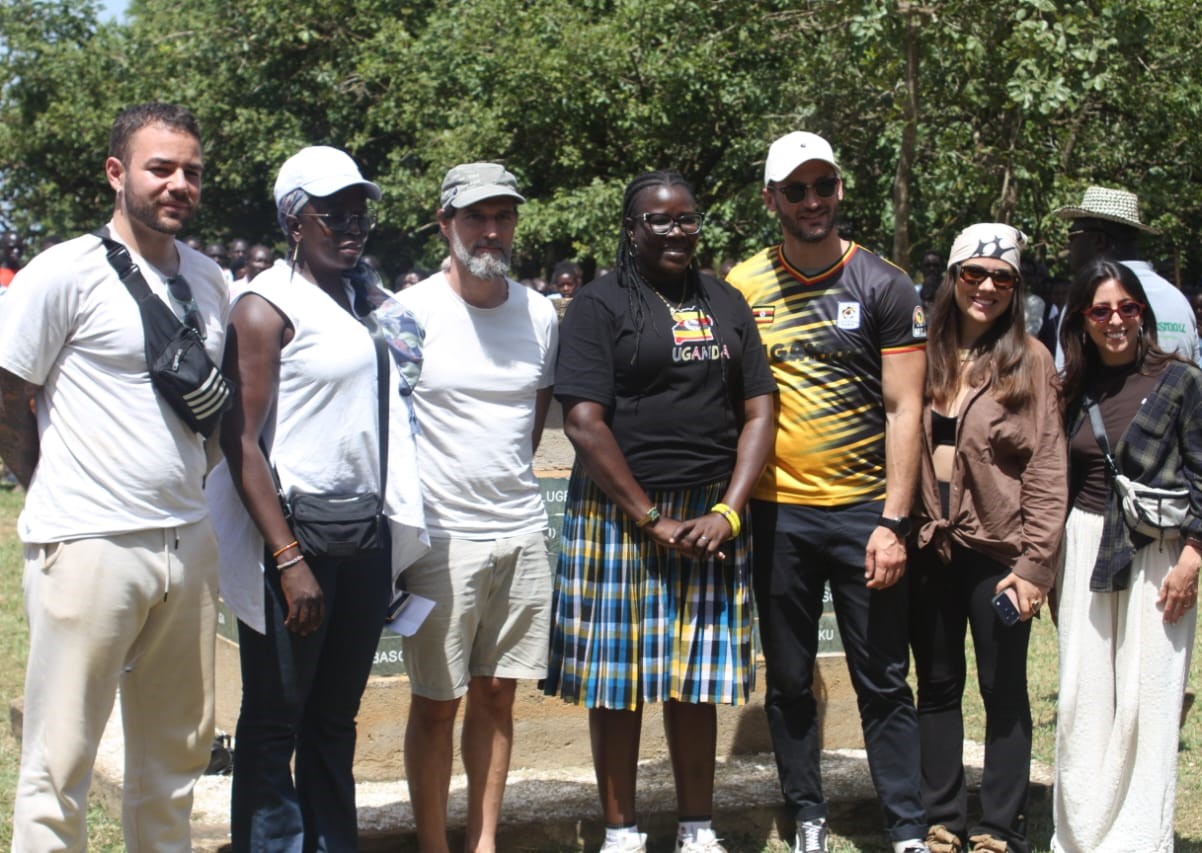

Uganda’s Ambassador to France, Doreen Amule, has intensified efforts to promote Uganda’s cultural and heritage tourism on the international stage after leading a comprehensive field tour of key historical and spiritual sites in northern Uganda.
The delegation, comprising visitors from France and Spain, toured the Centre of Uganda in Amolatar District before proceeding to the historic Kangai site in Dokolo District. The team accessed the region through the Namasale Ferry, an important transport link across Lake Kyoga.
The visit is part of a broader cultural diplomacy initiative aimed at exposing international audiences to Uganda’s lesser-known heritage assets beyond wildlife tourism, with emphasis on community engagement, historical interpretation, and cultural immersion.
Cultural diplomacy and tourism promotion
Amule said Uganda’s diplomatic missions are increasingly focusing on tourism marketing as a strategic economic driver. She noted that experiential exposure visits allow foreign partners to directly engage with Uganda’s cultural diversity, historical narratives, and local communities.
She added that Uganda’s identity as the “Pearl of Africa” must be reinforced through consistent international promotion of both established and emerging tourism sites.
According to Amule, one of her European counterparts had repeatedly expressed interest in visiting Uganda to experience its cultural and historical heritage firsthand before contributing to its promotion abroad.
Cultural reception at the Centre of Uganda
Upon arrival at the Centre of Uganda, the delegation was welcomed with traditional Lango music, dance performances, and locally prepared millet porridge, commonly known as nyuka kal. The cultural reception highlighted the region’s hospitality and traditional identity.
The Centre of Uganda, located in Amolatar, is widely regarded as a symbolic national landmark due to its geographical positioning and cultural significance.
Spiritual and national symbolism of the site
At the site, global health scientist, epidemiologist, sociologist, and physiotherapist Milton Mutto explained that the monument was inspired by what he described as a spiritual vision received in Sweden in 2009.
He said the Centre of Uganda was established in 2013 as a national altar representing all 56 tribes of Uganda, designed to promote unity, reconciliation, forgiveness, and peaceful coexistence among citizens.
Mutto added that the site carries national and spiritual importance and likened its symbolic role to global religious and cultural landmarks. He, however, called for improved infrastructure, accessibility, and government support to fully develop the site into a major tourism destination.
Local government support and tourism potential
Amolatar Resident District Commissioner Francis Okello Odoki Rwotlonyo welcomed the delegation and urged international visitors to help promote the Centre of Uganda globally.
He emphasized that Amolatar’s strategic location, combined with its proximity to Lakes Kyoga and Kwania, positions the district as a strong candidate for integrated tourism development. He also noted that the Centre of Uganda represents a unique cultural and geographical identity that could attract both domestic and international tourists if well developed.
Historic Kangai site and colonial resistance legacy
The delegation later proceeded to Kangai in Dokolo District, a site of major historical significance associated with the capture of Kabaka Mwanga II and Omukama Kabalega by British colonial forces on April 9, 1899.
Historical accounts indicate that the two monarchs were captured during a dawn raid led by Col. Evatt, with support from Semei Kakungulu, marking a decisive moment in the end of organized resistance to colonial rule in the region.
Today, the site features monuments positioned about 200 metres apart and is undergoing development under the Ministry of Tourism and Antiquities as part of the Mwanga–Kabalega heritage tourism initiative.
Tourism outlook
Stakeholders say the integration of spiritual, cultural, and historical sites into a single tourism circuit in northern Uganda is expected to strengthen the country’s heritage tourism portfolio, diversify tourism products, and increase international visitor interest beyond traditional safari destinations.