


By Patrick Okino
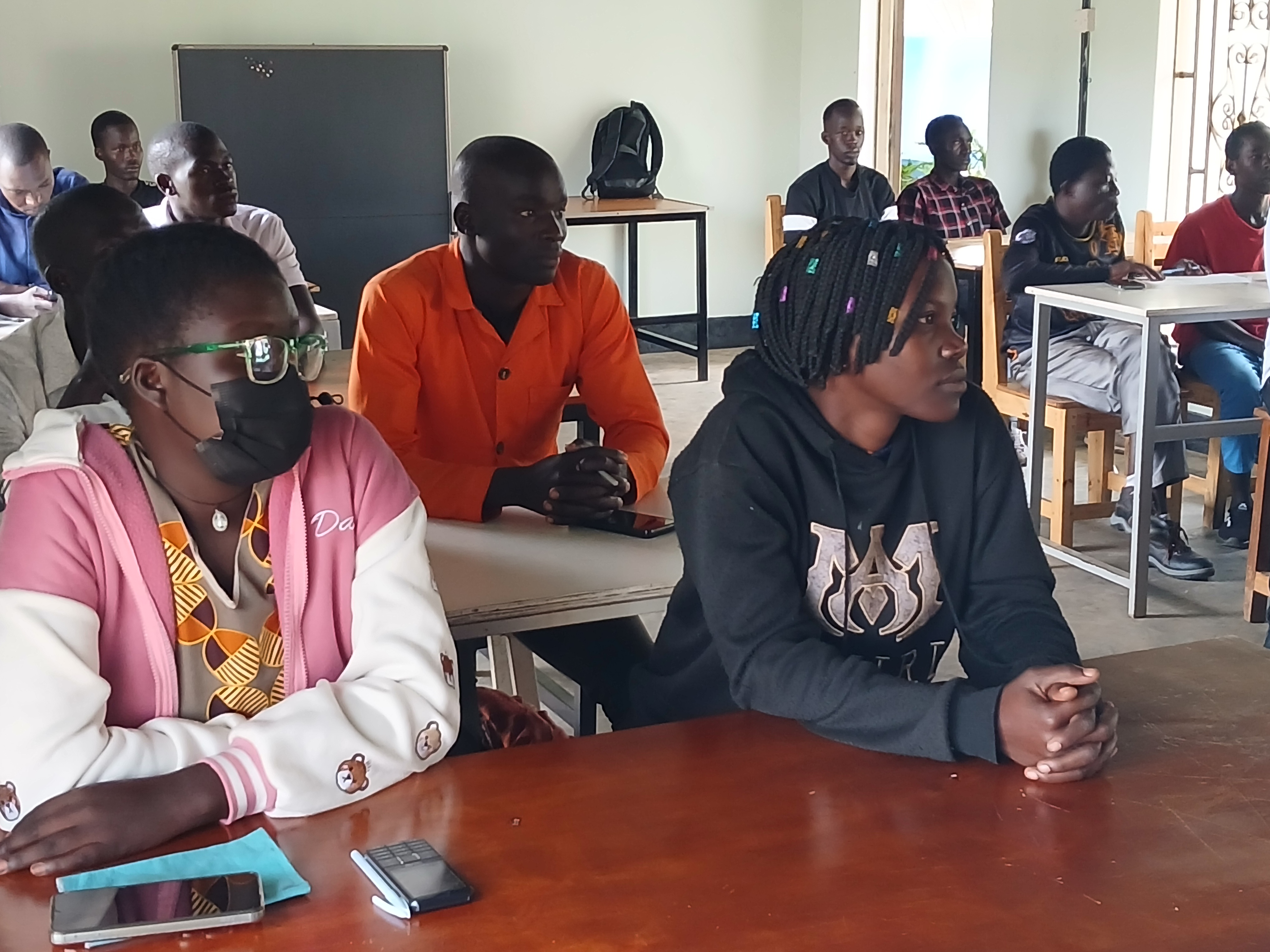
Students admitted to the Fountainhead Institute of Management and Technology for training in the efficient and productive use of solar energy have officially begun a five-week program funded by the German government through GIZ.
The first cohort of 30 trainees was launched on May 18, 2026, and the training is scheduled to run until June 22, according to the institute’s principal, Tom Okao.

Launching the program, GIZ Energy Advisor Prossy Nambajjwa praised FIMAT for partnering with the organization and expressed hope that the training would improve the use of solar energy in communities.
“We are not taking this partnership for granted because without FIMAT we would not be here. They welcomed us and partnered with us, so we thank them,” she said.

Nambajjwa added that both the institute and the wind consultants had contributed significantly to making the training possible.

She encouraged the students to remain focused and fully engage in acquiring solar energy knowledge and practical skills.
“At the end of the five weeks, we want to see transformation in your lives and communities because the target is community transformation,” she said.
She also noted that the program aims to help trainees become financially self-sustaining while contributing to community development.

Project consultant Joshua Kunya said the initiative is being implemented in three institutions across Northern Uganda: Amelo Technical Institute, Muni University, and Fountainhead Institute of Management and Technology.
He explained that the integration of solar energy training is intended to demonstrate the broader potential of renewable energy beyond its traditional uses.
Okao thanked the German government through GIZ for funding the project, noting that the course is academic in nature and will be assessed by the Uganda Vocational and Technical Assessment Board. Successful participants will receive qualifications that can help them secure employment both within and outside Uganda.
He urged the trainees to take the program seriously rather than treat it like an ordinary workshop.
“When we look at Uganda and Africa at large, many people have degrees, diplomas, and certificates, but they are unable to use their qualifications to transform society and improve lives,” he said.
Okao also revealed that enrollment for the second cohort has already begun, with training expected to start on June 22, 2026.