Restored Dip Tank Brings Relief to Livestock Farmers in Apac

By Patrick Okino
For years, Ramathan Okello watched his cattle suffer under the grip of ticks and disease, month after month draining his modest earnings. In Abeibuti Ward, Akokoro Town Council in Apac District, treating livestock had become a costly routine—one he could neither escape nor sustain.

Every month, Okello spent about Shs20,000 on acaricides to protect his six cattle. Without a communal livestock treatment facility, farmers like him were left to fight ticks individually, often using ineffective and expensive methods. Few imagined that relief would arrive through the revival of a dip tank that had collapsed decades ago.
“I never thought this place would come back to life,” Okello says, standing beside the newly restored structure. “But now we are dipping our animals freely. This is a big relief.”
Across Uganda, ticks remain a silent but devastating enemy to livestock farmers. According to the National Agricultural Research Organization (NARO), the country loses an estimated Shs3.8 trillion annually to tick-borne diseases. These losses arise from anemia, reduced productivity, high treatment costs, livestock deaths, and rejection of poor-quality products in the market.
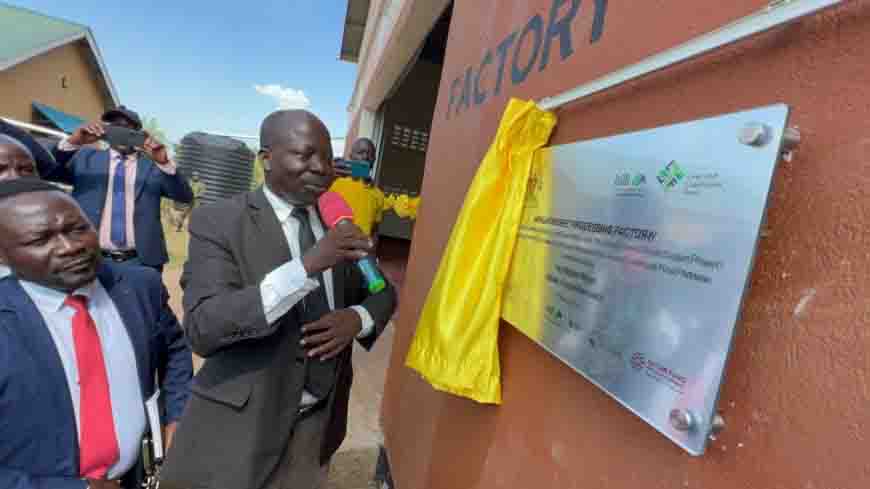
The rehabilitation of the Akokoro dip tank has offered a lifeline. The facility was restored at a cost of Shs67 million by Jimmy Akena, the Member of Parliament for Lira City East and President of the Uganda People’s Congress (UPC). The dip tank now serves not only his livestock but hundreds of cattle owned by farmers in surrounding communities.

Livestock farming remains the backbone of rural livelihoods in Uganda. The 2021 National Livestock Census shows that the country’s cattle population stands at 14.5 million, a 27.2percent increase from 2008. More than half of livestock-keeping households rear animals mainly for subsistence, with an average herd size of six cattle.
Despite this growth, farmers continue to face persistent challenges. Peter Okello, another livestock farmer in the area, says drought, pasture shortages, ticks, diseases, water scarcity, and the rising cost of treatment threaten their survival.
“Sometimes you feel helpless,” he says. “You want to keep animals, but the expenses are too high. Government support would make a big difference.”
Jasper Opio, a farmer who keeps both goats and cattle, welcomed the restoration of the dip tank, praising Akena for reviving a facility many had written off.
He said the initiative should prompt government action to save livestock farmers from persistent losses caused by tick-borne diseases.

“Although we are currently accessing the facility free of charge, we know a time will come when we shall have to contribute towards the costs since this is a private dip tank,” Opio noted.
He added that government involvement in restoring public dip tanks would ensure long-term affordability and protect farmers from the heavy financial burden of livestock treatment.
Veterinary experts warn that northern Uganda’s climate provides a fertile breeding ground for ticks and tsetse flies. Dr. Silvano Odero, a veterinarian in the region, says the restored dip tank comes at a critical time.
“This environment favors both ticks and tsetse flies,” Dr. Odero explains. “The major diseases here include trypanosomiasis, which also affects humans through sleeping sickness.”
He notes that many farmers relied on traditional tick-control methods such as hand-picking and rotational grazing—approaches he describes as ineffective and labor-intensive.
“Imagine hand-picking ticks from a large herd,” he says. “Some ticks have long, sharp mouthparts that can’t be safely removed. Dipping is the most effective and cost-efficient solution.”
With proper management, Dr. Odero says, the dip can serve the community for nearly a year on a single recharge, requiring only regular monitoring and replenishment. Plans are already in place to dip animals weekly.
Beyond disease control, the dip tank promises broader benefits: reduced treatment costs, improved milk and meat production, and better household incomes. It also encourages more farmers to invest in livestock, knowing the risks are now manageable.
However, Dr. Odero cautions that sustainability will depend on community ownership and co-funding, as well as government investment in restoring other collapsed dip tanks at sub-county level. He also points to a shortage of qualified veterinary extension workers to guide farmers.
Speaking at the commissioning, Akena said this was the first dip tank he had rehabilitated since livestock dipping stopped in 1987. He criticized government programs that promote livestock restocking without investing in disease control infrastructure.
He revealed plans, through partnerships, to restore at least 80 collapsed dip tanks across the Lango and Acholi sub-regions.
“For Northern Uganda to reclaim its future, we cannot rely only on promises. Sometimes you must stand up and do what needs to be done,” Akena said, adding that communities must take responsibility for managing and sustaining the facilities.
He said UPC has incorporated livestock livelihood restoration into its manifesto, emphasizing that cattle play a critical role in education, marriage, and social security.
For farmers like Ramathan Okello, the restored dip tank represents more than infrastructure—it is renewed hope.
“We are no longer spending all our money on drugs,” he says with a smile. “Now we can focus on growing our herds and improving our lives.”